Carrier history
1876
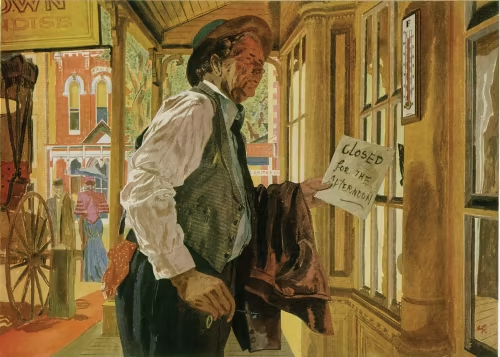
The World Before Cool
Before the invention of modern air conditioning, hot, steamy weather often meant lost work days and sleepless nights.
1881
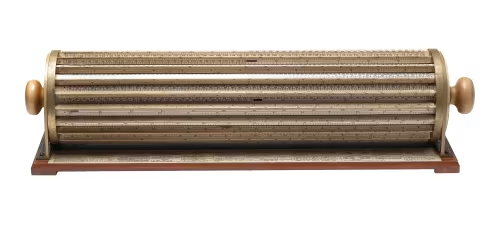
Slide Rule
Willis Carrier’s slide rule, a circular calculating instrument, was patented in 1881 and manufactured by Kueffel & Esser. At the slide rule’s core is a cylinder, or slide, containing a series of scales. Careful scale alignment yields the precision of a modern calculator. Carrier used this instrument to calculate dew point control, a breakthrough that was the foundation of his invention of modern air conditioning.
1902
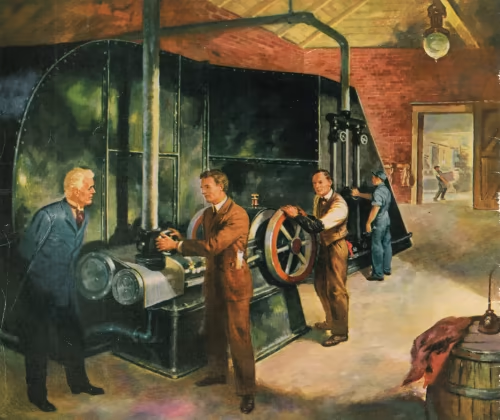
Starting the Engine
Willis Carrier starts the engine that will drive the world’s first modern air conditioning system, installed in the summer of 1902 at the Sackett & Wilhelms printing plant in Brooklyn, New York. This artist’s conceptualization appeared in the August 1954 edition of Steelways magazine, which noted, thanks to Carrier, that “air conditioning spread through the industry like a cool breeze.”
1902
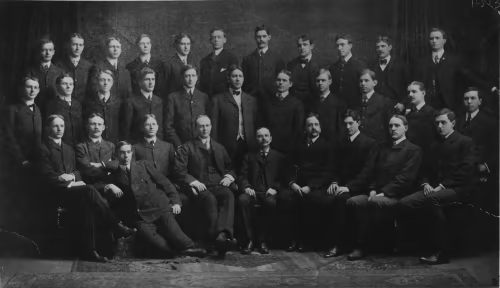
Carrier’s Beginnings
A group portrait of the engineers of Buffalo Forge Company includes Willis Carrier (bottom row, third from right) and his future business partner, J. Irvine Lyle (middle row, sixth from left). Carrier, Lyle and five fellow engineers would launch Carrier Engineering Corporation as an independent entity in 1915.
1902
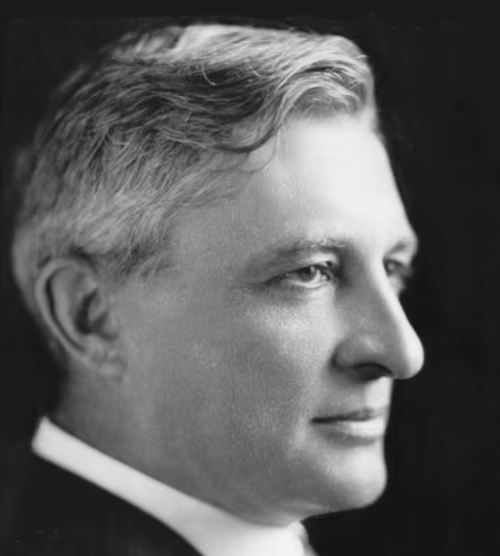
Dr. Carrier, “The Chief”
The invention of modern air conditioning in July 1902 was just the beginning for Willis Carrier, whose contributions to efficient industrial production and enhanced human comfort over the next 50 years were so comprehensive that he became known as “The Father of Air Conditioning.”
1906
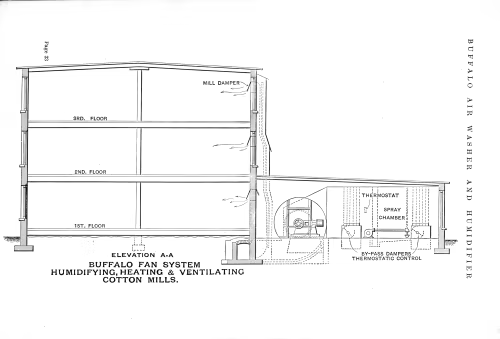
The First Central System
Buffalo Forge Company sells Carrier’s “Apparatus for Treating Air” to the Chronicle Cotton Mills of Belmont, North Carolina, and applies it to the mill’s fan-heater ventilating system. It was the first industrial “central station” humidifying system.
1906
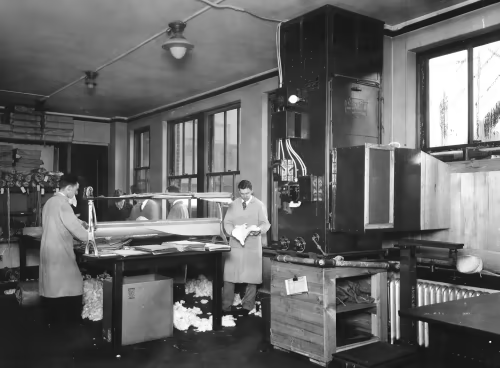
Textile Plants Adopt A/C
The textile industry was among the earliest and most enthusiastic adoptees of modern air conditioning. Here, buyers for New England Cotton work in a clean, efficient environment.
1911
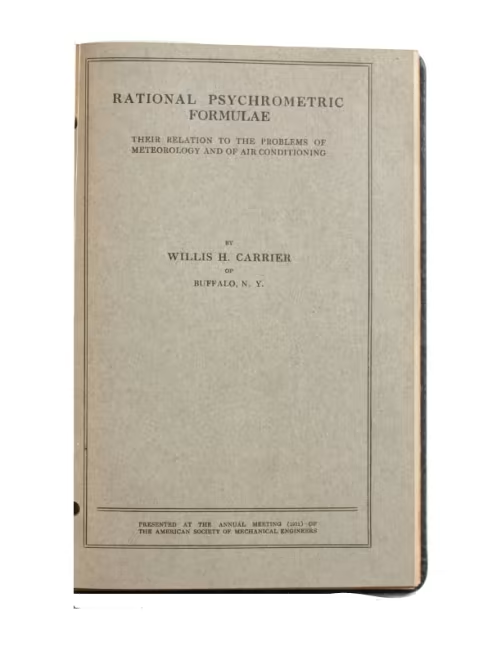
The Magna Carta
Willis Carrier’s Rational Psychrometric Formulae brought science to what had been the often hit-or-miss design of air-conditioning systems, and in the process made Carrier an international name. The chart would be updated and reprinted regularly, serving as an essential tool to generations of engineers and remaining the basis of today’s designs.
1914
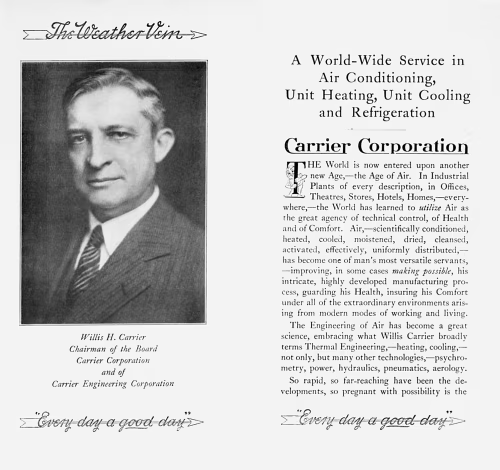
Carrier Around the World
Almost from the start, air conditioning became an international phenomenon, with important installations of equipment designed by Willis Carrier reaching from North America to Asia, Europe, the Middle East, Central and South America.
1914
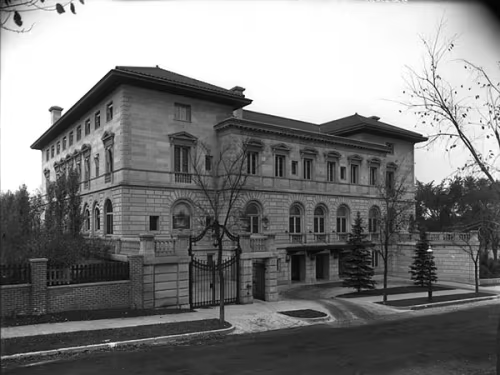
Home Comfort Begins
Carrier achieves the first application of air conditioning in a residence for the Charles Gates mansion in Minneapolis, Minnesota.
1915
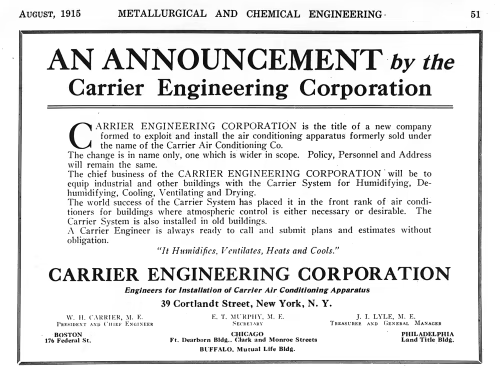
Carrier Engineering Corporation
Carrier Engineering Corporation had talented engineers and bright prospects, but little capital. Promoting the business and booking sales were essential activities in the company’s first few months of existence.
1915
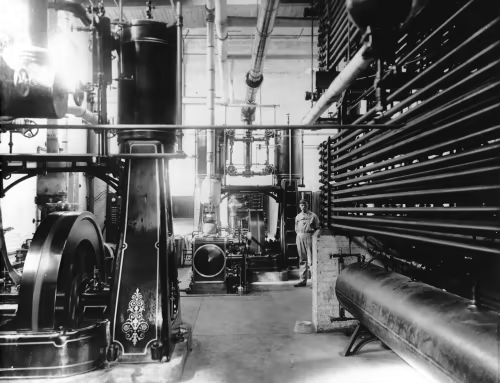
Contributing to the War Effort
Carrier’s installation of modern air conditioning at the International Arms and Fuse Company in New Jersey was representative of the sophisticated work that the company performed during World War I, drastically improving the efficiency of workers.
1917
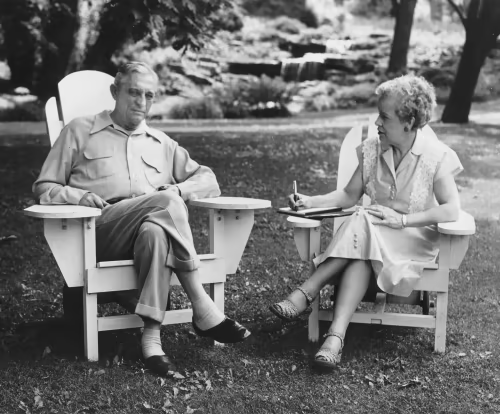
A Woman Engineer
Carrier hires Margaret Ingels as America’s first woman air-conditioning engineer, right around the time that the decision to allow U.S. women the right to vote was being debated by lawmakers. True to Carrier’s pioneering spirit, she was the subject of several articles in national magazines and served on President Herbert Hoover’s Conference on Home Building and Home Ownership in the late 1920s. Ingels also wrote Willis Carrier’s biography, published in 1952.
1918
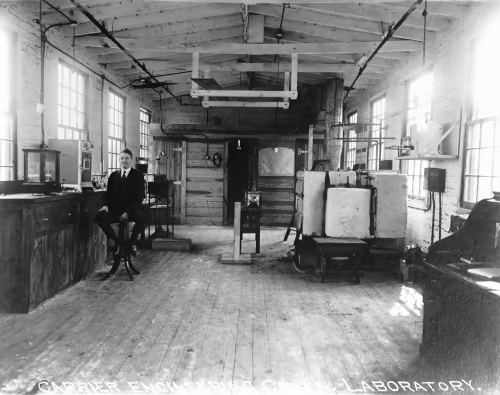
Newark Research Lab
This iconic photo of Carrier co-founder Alfred E. “Ned” Stacey shows him seated in the company’s Newark, New Jersey, research laboratory shortly after its founding in 1918.
1919
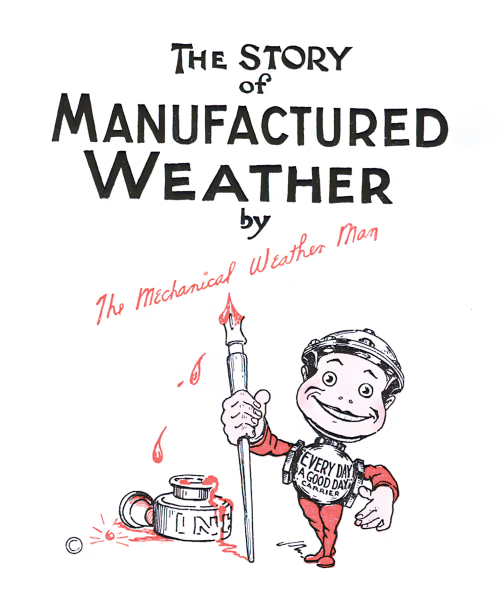
A Mechanical Weather Man
The Mechanical Weather Man authored his own book (with an assist from Carrier’s president, J. Irvine Lyle) in 1919, demonstrating the benefits of Carrier’s modern air conditioning in dozens of industries.
1922
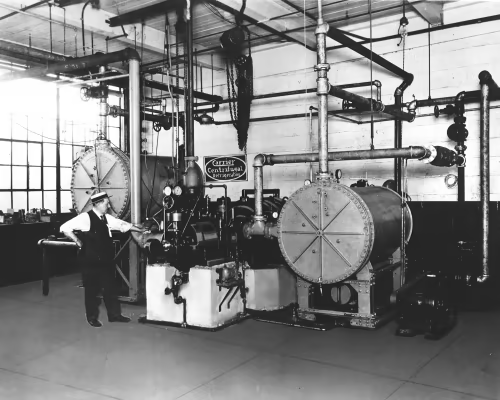
Centrifugal Chilling Takes Off
In 1922, Carrier unveiled the first centrifugal chiller, which opened the door to large-scale comfort air conditioning.
1922
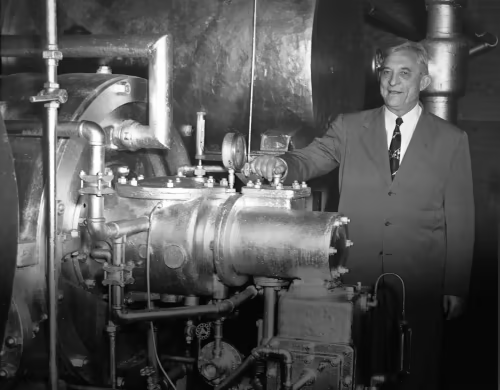
On the Way to 2,000
On the same day in 1950 that Carrier Corporation completed its 2,000th centrifugal refrigeration machine, Willis Carrier, Chairman Emeritus, visited the Onondaga Pottery Company in Syracuse, New York to inspect his first centrifugal, completed in 1922. The Chief found it in perfect working condition. This picture is thought to be among the last taken of Carrier.
1925
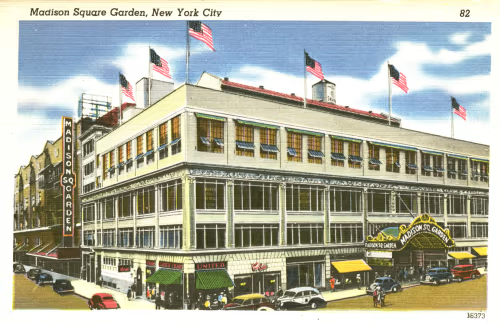
Indoor Ice
New York City’s “new” Madison Square Garden opened in 1925, employing Carrier centrifugal chillers to cool its patrons and produce a perfect ice surface for professional hockey.
1926
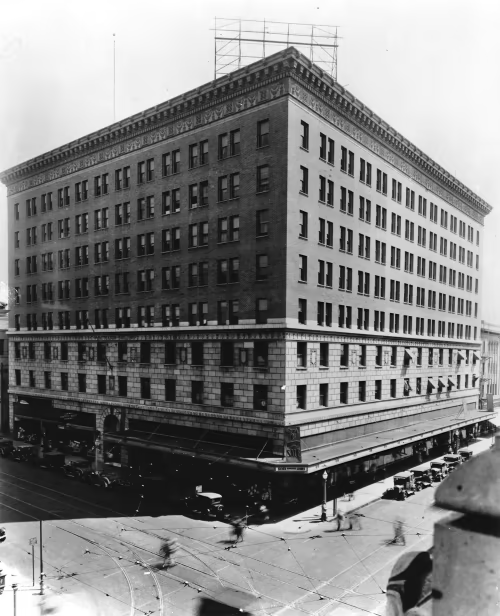
Taking Comfort Skyward
With Carrier centrifugal chiller equipment in the basement, and air conditioning on the roof, the T.W. Patterson Building in Fresno, California, cooled floors two through seven for its tenants, becoming Carrier’s first multi-story installation.
1928
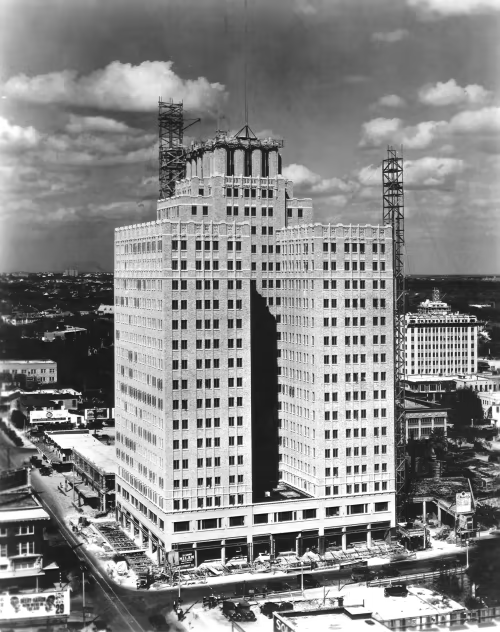
Central Air Goes Vertical
The construction of the Milam Building in San Antonio, Texas, included Carrier central air conditioning, making it the first skyscraper to install comfort cooling as it was built.
1930
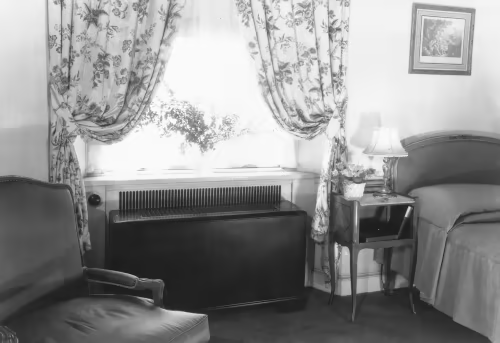
Movin’ On Up
In March 1930, Carrier recorded the first sale of its window-sill-height Weathermaster units to the Superheater Company of East Chicago, Indiana, to air condition the second floor of a two-story building. In August, the California Bank of Los Angeles contracted for 490 Weathermasters to air condition its 15-story building. The U.S. Supreme Court was also cooled using 180 Carrier Weathermaster units.
1931
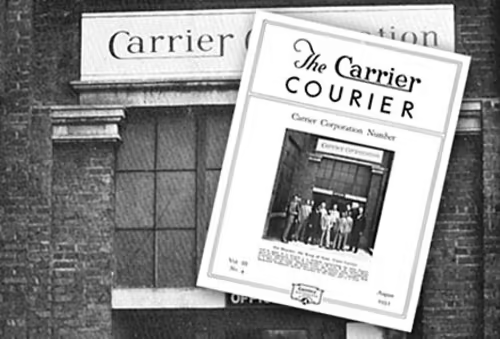
Thailand Comes to Carrier
The August 1931 Carrier Courier featured a picture of His Majesty, King Prajadhipok of Siam, with Willis Carrier and a number of company senior executives during the King’s visit to Carrier’s Newark facility. Since that day, Carrier has been a leading supplier of air conditioning to the people and industries of Thailand.
1931
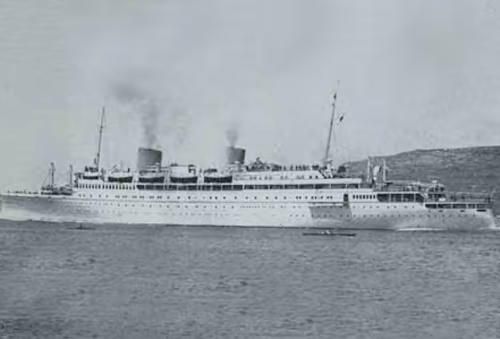
Carrier Takes to the Seas
In 1931, the M.V. Victoria, a 13,400-ton Italian motorship designed to run from Italy to Egypt, became the first vessel to make its maiden voyage equipped with Carrier air conditioning.
1937
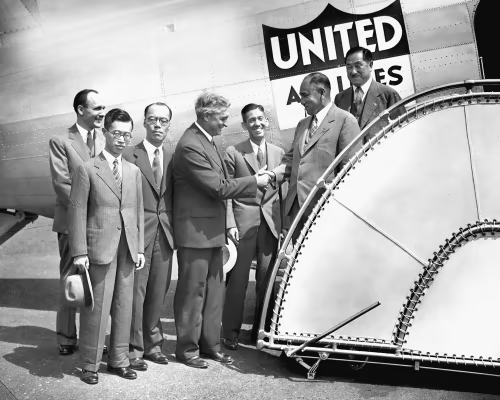
预见未来
从1907年威利斯·开利的空调设备销售给国际客户——横滨富士丝织公司,与日本保持着密切的联系。
1939
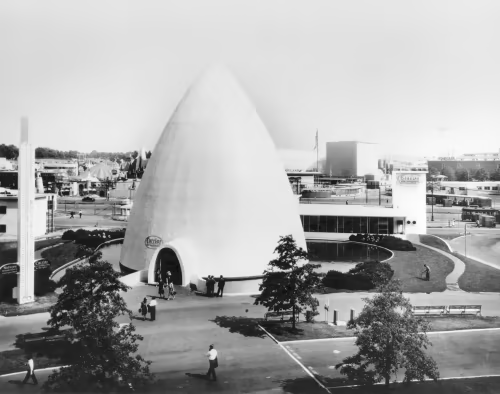
The Igloo of Tomorrow
When New York City organizers established a World’s Fair committee in 1935, they adopted the motto “Building the World of Tomorrow” and set about attracting companies and technologies that provided for “individual fulfillment and human progress.” Few fit this definition better than Carrier Corporation and modern air conditioning. The Fair opened in 1939 with nearly 1.3 million visitors flocking to the prominent “Carrier Igloo of Tomorrow” in the first 100 days. Inside the Igloo and in the adjacent Hall of Weathermakers, guests learned the steps involved in air conditioning, toured a modern food store using Carrier refrigeration, and viewed an exhibit with Carrier self-contained air conditioning.
1941
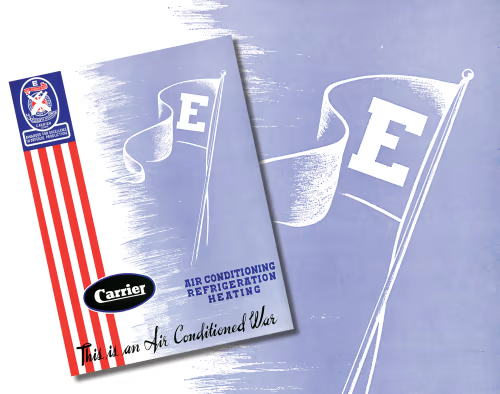
An Air Conditioned War
With its air conditioning products focused on industrial productivity, Carrier worked tirelessly in support of Allied troops around the globe.
1942
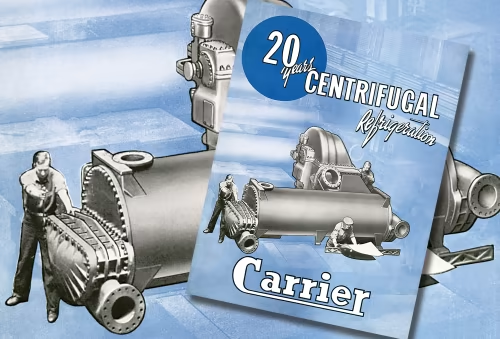
Carrier Helps the War Effort
In 1942 Carrier marked the 20th anniversary of Willis Carrier’s invention of the centrifugal chiller. The innovation famous for introducing the general public to air conditioning became, during World War II, a critical component in the efficient production of war materiel.
1944
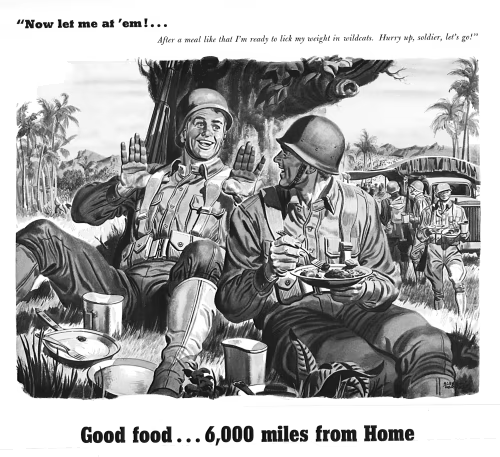
Refrigerators in the Field
Carrier’s contributions to the war included refrigeration products that insured the safe delivery and storage of perishable foods served to soldiers “6,000 miles from home.”
1946
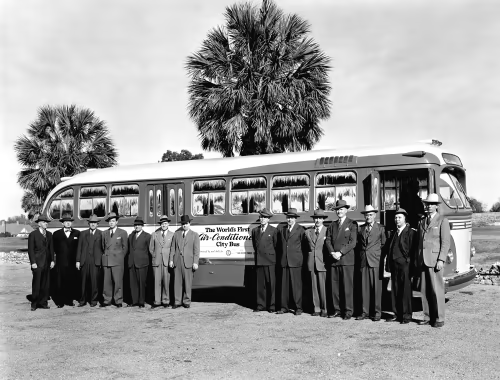
Keeping Transit Cool
San Antonio, Texas, touts “the World’s First Air-Conditioned City Bus” in 1946.
1950
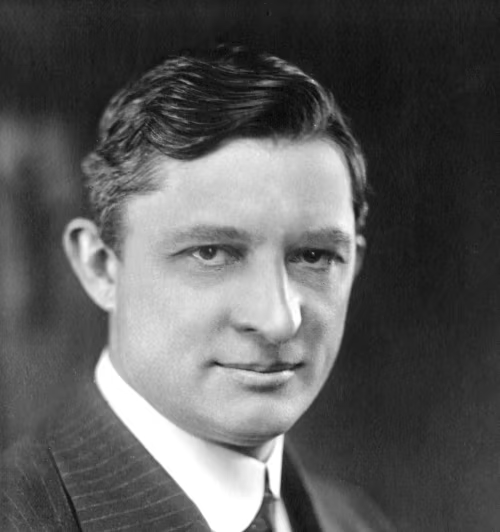
Willis Carrier Passes Away
On October 7, 1950, shortly before his 74th birthday, Willis Carrier died while on a trip to New York City. It was the end of a rich and remarkable life, the close of an era for both an industry and a company, but just the start of an enduring legacy.
1952
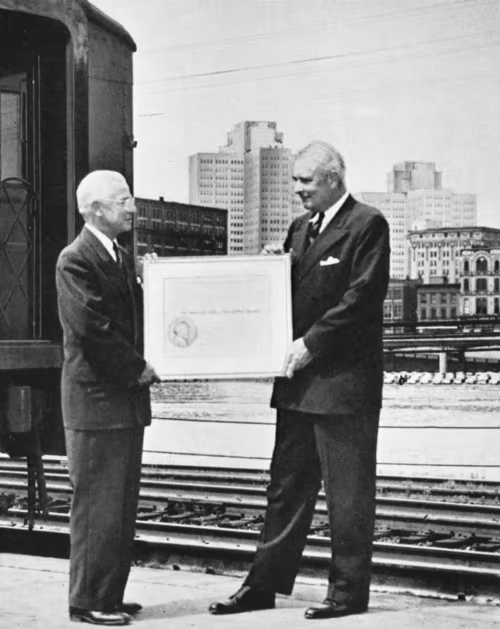
Air Conditioning Turns 50
On the 50th anniversary of air conditioning, Carrier President Cloud Wampler (right) and the president of the P&lE Railroad stand on the platform in Pittsburgh, where Willis Carrier first conceived of modern, spray-type air conditioning. In the background is Pittsburgh’s Gateway Center, at the time the world’s largest installation of Carrier Conduit Weathermasters.
1956

Residential Community
In January 1956, Carrier won the largest contract ever awarded for residential air conditioning, jointly announced with the community building firm of Levitt & Sons, Inc. Carrier was able to provide Weathermaker central air-conditioning systems for 702 “Country Clubber” homes in Levittown, Pennsylvania.
1957
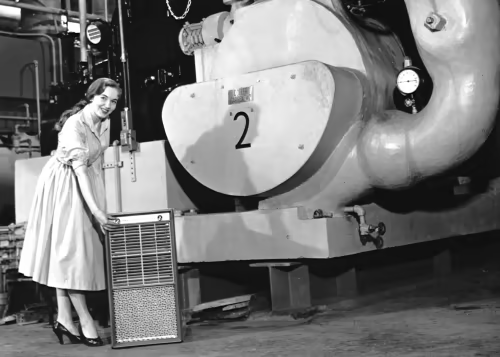
Carrier Goes Mobile
Few pictures demonstrate the breadth of Carrier’s capabilities better than this 1957 shot from the Mobile Homes Show in the New York Coliseum (at the site of today’s Time Warner Center). A hostess turns the control dial on a tiny one-horsepower Roomette air conditioner for mobile homes, while behind her a Carrier centrifugal chiller provides cooling for the nine acres of exhibit space at the show.
1968
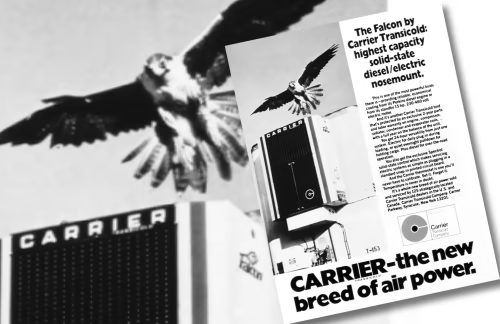
Reimagining Refrigerated Transport
Carrier Transicold’s record of innovation included the first front-wall refrigeration unit for containers in 1968. Since then, it has pioneered work in everything from efficient diesel/electric installations to introduction of the first natural refrigerant container unit in 2010.
1971

110 Floors of Cooling
Carrier is awarded the principal air conditioning contract for Chicago’s 110-floor Sears Tower, which when completed was the tallest building in the world.
1979
UTC Acquires Carrier
The acquisition of Carrier by United Technologies in 1979 would reshape the global market for heating, ventilation and air conditioning.
1980

Carrier Goes Digital
Carrier products are providing efficient cooling to data centers all over the world, underscoring Carrier’s important role in helping make the Web accessible to people everywhere.
1990
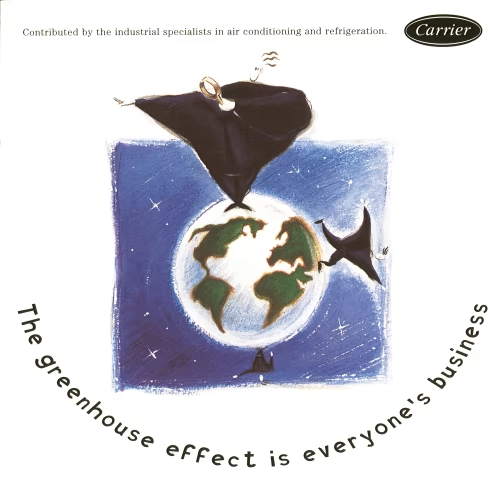
Environmental Stewardship
Carrier’s environmental stewardship has always included a strong education component and a commitment to the use of sound refrigerants well in advance of regulations and competitors.
1993

Preserving a Masterpiece
Three decades of painstaking work highlighted the original colors of Michelangelo’s masterpiece in the Sistine Chapel but also left it exposed to the elements. Carrier’s preservation work included the use of highly accurate humidity-measuring units, like this one, placed on a ledge about 30 feet above the floor and invisible to visitors.
1993
Global Sustainability
Carrier ceases to manufacture CFC-based chillers in the U.S., two years before the deadline established by the U.S. Clean Air Act and 16 years ahead of requirements for developing countries.
2002
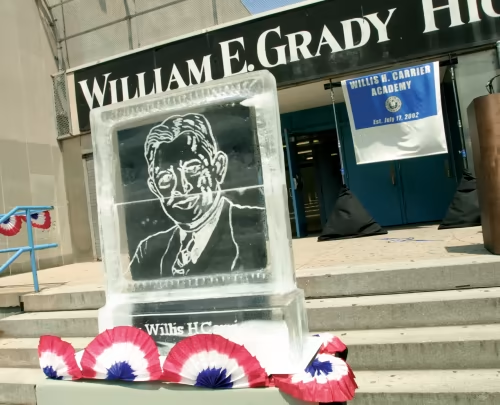
Hitting the Century Mark
On the centennial of modern air conditioning, Geraud Darnis, president of Carrier Corp., told an audience at the W. E. Grady High School in Brooklyn, New York, “Creating the Willis H. Carrier Academy is the ideal way to honor his belief that education and understanding are the keys to solving challenges of all kinds.”
2008

Gold Medal Performance
Beijing National Stadium, a major venue used when Beijing hosted international athletic competition and often referred to as the “Bird’s Nest,” featured Carrier air-handling units and the first Chinese-produced HVAC product certified by EN 1886, the highest international HVAC standard.
2011
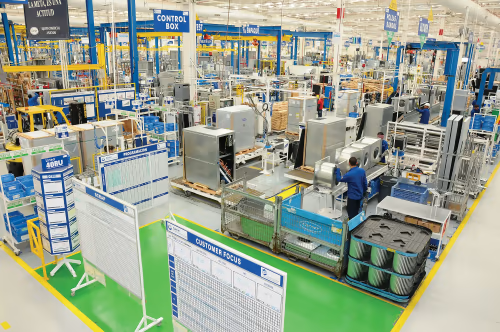
Carrier Takes the LEED
In 2011, Carrier’s Monterrey Commercial plant was the first industrial facility in the global heating, ventilation and air conditioning (HVAC) industry to be Leadership in Energy and Environmental Design (LEED®) Gold Certified.
2011
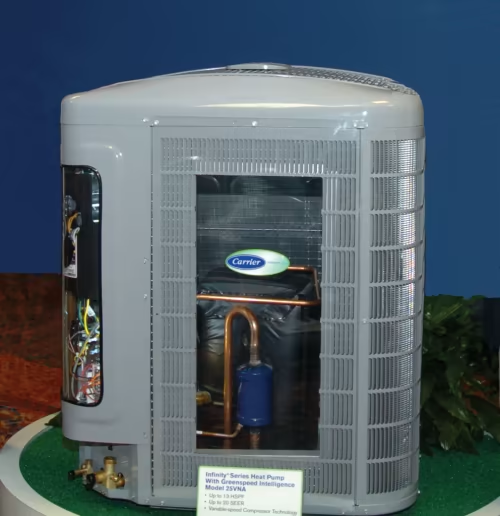
To Infinity…and Beyond!
In 2011, Carrier introduced the Infinity® heat pump with Greenspeed™ intelligence offering the greatest heating efficiency of any air source heat pump.
2012
110 Years and Counting
Carrier celebrates the 110th anniversary of the invention of modern air conditioning. Learn More at WillisCarrier.com
2012
110 Years and Counting
Carrier celebrates the 110th anniversary of the invention of modern air conditioning. Learn More at WillisCarrier.com